
Why More Internet Users Are Choosing VPN Services in 2026
Best VPN Services continue to grow in popularity as internet users seek stronger privacy protection, safer browsing, and more control over how their data is exposed online.
A VPN, or Virtual Private Network, creates an encrypted connection between your device and the internet. Instead of sending traffic directly through your internet service provider, a VPN routes it through a secure server, helping to hide your IP address and protect your online activity from unnecessary tracking.
Why VPNs Have Become Essential
Internet users now face more privacy risks than ever before. Public Wi-Fi networks, data brokers, intrusive advertising systems, location tracking, and cyber threats all make online security more important. A reliable VPN can reduce these risks by adding an extra layer of encryption and anonymity.
For everyday users, VPNs are useful for private browsing, travel, streaming, remote work, and safer access to online accounts. For professionals, they can help protect sensitive communications and reduce exposure when working from hotels, airports, cafes, or shared networks.
Key Features of a Good VPN
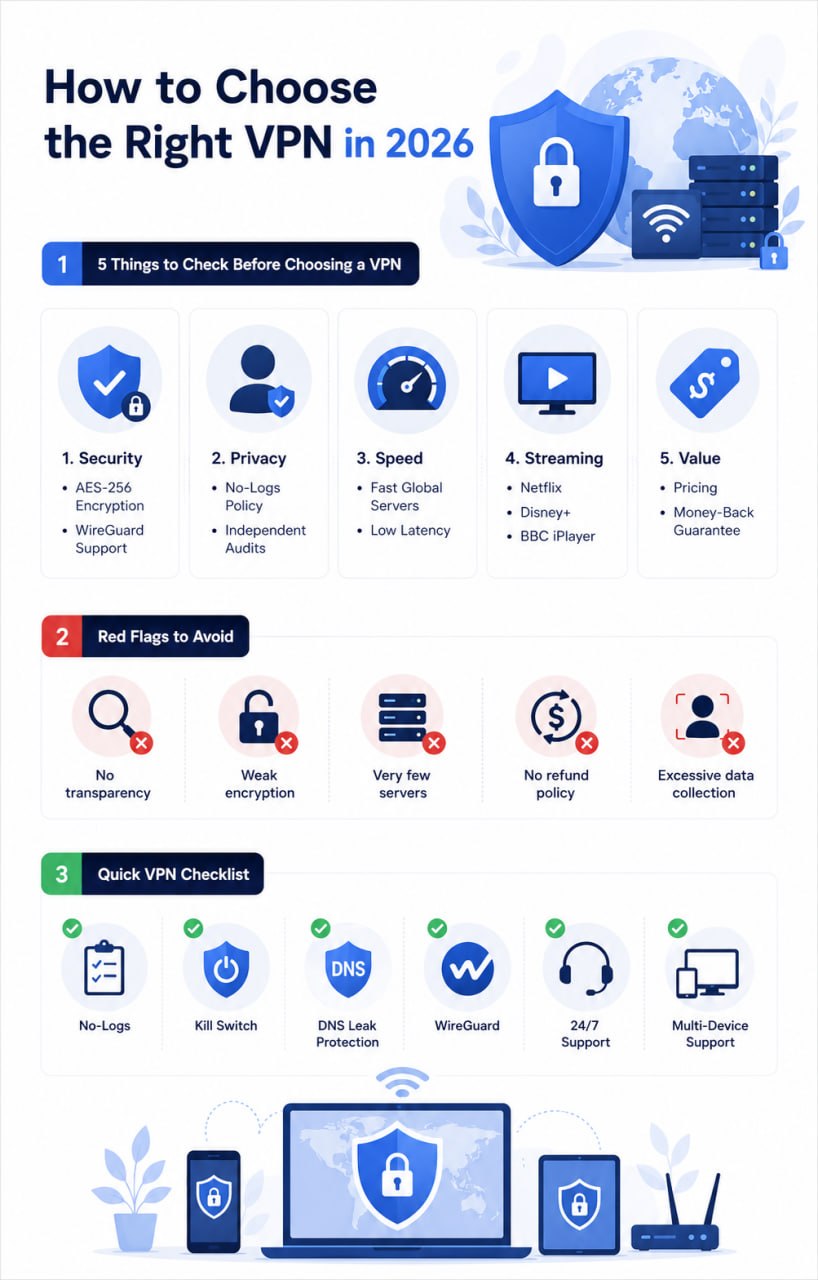
Not every VPN service offers the same level of protection. Before choosing a provider, users should evaluate several important factors:
- Strong encryption, such as AES-256
- Secure protocols like WireGuard, OpenVPN, or IKEv2
- No-logs privacy policy
- DNS leak protection
- Kill switch functionality
- Fast server network
- Support for Windows, macOS, Android, iOS, and routers
- Transparent pricing and refund policy
VPNs for Privacy and Anonymous Browsing
One of the main reasons people use VPNs is to improve online privacy. Websites and advertising networks often collect data about user behavior, location, device type, and browsing patterns. A VPN helps limit this exposure by masking the real IP address and routing traffic through a private server.
However, a VPN is not a complete anonymity solution by itself. Users should combine it with good security habits, such as using strong passwords, enabling two-factor authentication, avoiding suspicious downloads, and keeping devices updated.
VPNs for Streaming, Travel, and Remote Work
VPN services are also popular among travelers and streaming users. A large server network allows users to connect from different regions, which can be useful when accessing services while abroad. Remote workers also benefit from VPN encryption when connecting to business platforms from public or unfamiliar networks.
For streaming, speed is especially important. A good VPN should provide stable performance, low latency, and reliable access without frequent buffering or connection drops.
VPN Protocols Explained
Modern VPN providers usually support several connection protocols. WireGuard is known for speed and efficiency, OpenVPN remains a trusted standard for security and flexibility, while IKEv2 is often useful for mobile devices because it reconnects quickly when the network changes.
The best protocol depends on the user’s needs. For streaming and gaming, speed may be the priority. For privacy-focused users, security features and provider transparency may matter more.
How to Choose the Right VPN Provider
When comparing VPN providers, users should look beyond marketing claims. The most important questions are whether the provider has a clear no-logs policy, whether it has been independently audited, how fast its servers are, and whether it supports the specific use cases the user needs.
A strong VPN review should compare real-world performance, pricing, device support, privacy standards, server coverage, streaming compatibility, and customer support. This helps users make a decision based on facts rather than advertising.
Final Thoughts
VPNs have become an important part of modern digital security. They help protect personal data, improve privacy, and make browsing safer on public and private networks. As online tracking and cyber risks continue to grow, choosing a trustworthy VPN provider is no longer just a technical decision — it is a practical step toward safer internet use.